Kerflow
Rehabilitation software for bedridden patients with limited mobility
I worked at Inria Startup Studio on the Kerflow project alongside my colleague Diane Dewez. The goal was to leverage and transform a research project into a viable business model.
Kerflow is a rehabilitation software for bedridden patients. It uses a VR headset to display a first-person walking simulation, stimulating patients’ nervous system and accelerating their recovery process.
In this project, I have had the opportunity to combine the knowledge I gained in product development at Actronika with the research skills acquired during my PhD studies.
Activities
Transformed a research project into an industrialized product prototype
Interviewed stakeholders (patients and therapists) to understand their needs and expectations
Developed virtual environments adapted to patients with limited mobility
Developed a wireless haptic feedback device that worked in synchrony with a simulation in VR
Role
Project owner
VR developer
User researcher
Tools
Unity
C#
Arduino IDE
FreeCAD

The problem
There is a risk of mobility loss for people who have suffered a stroke or who have been bedridden for a long period of time.
Typically, the rehabilitation process begins once the patient regains a certain level of mobility. In the beginning, moving a single limb that was previously paralyzed can sometimes be extremely painful and frustrating for patients.
Our solution
Kerflow proposes a solution to stimulate bedridden patients with limited mobility using multi-modal feedback.
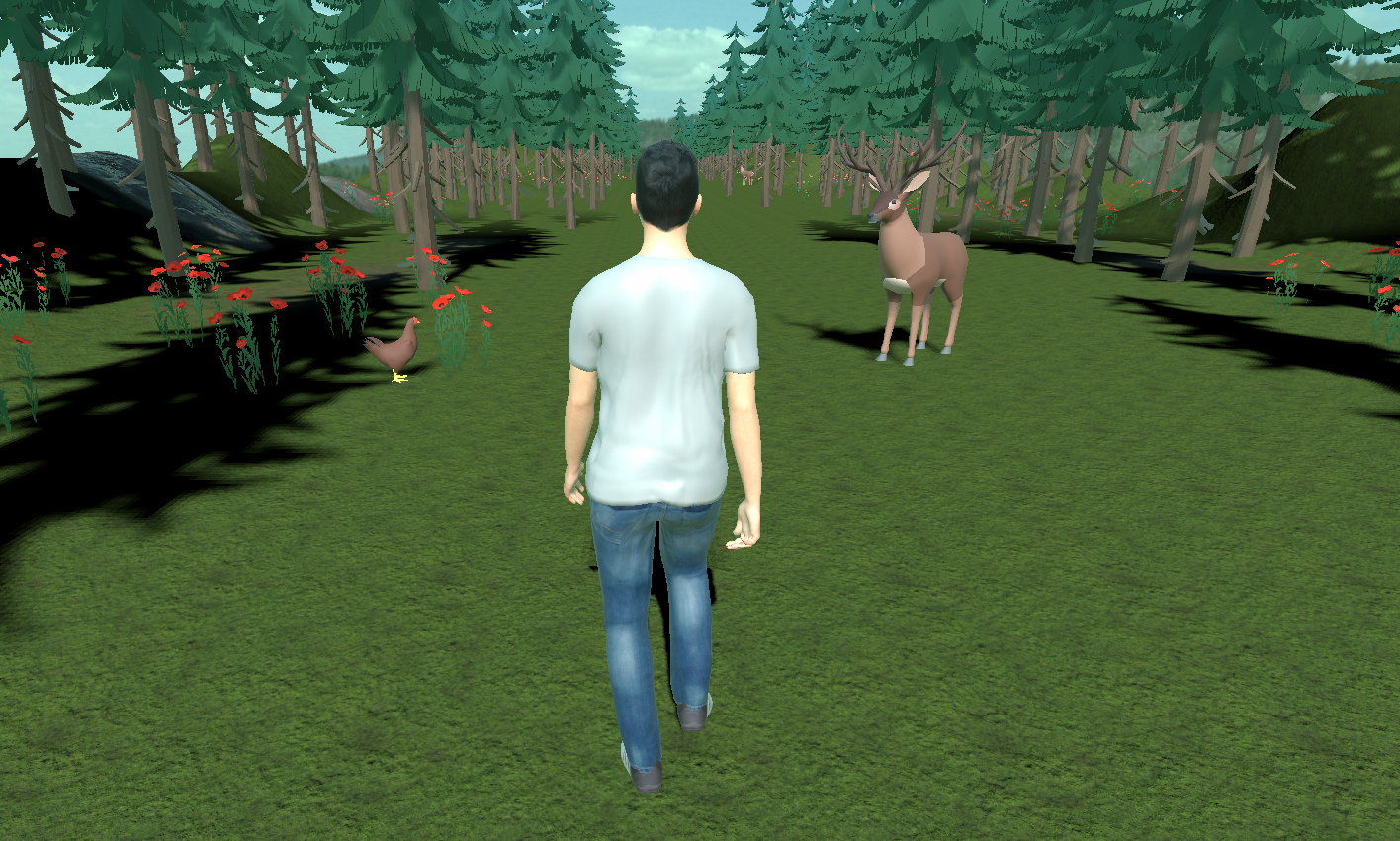
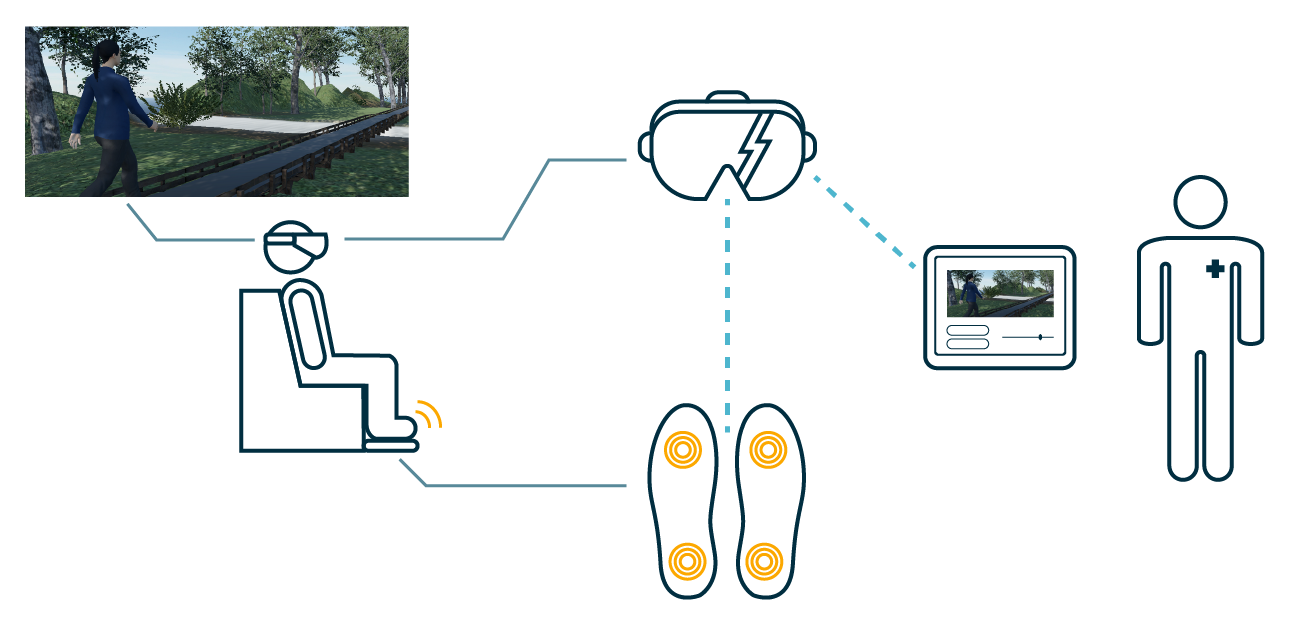
This solution uses virtual reality to immerse patients into a walking simulation. Wearing the XR headset, patients experience the sensation of walking from a first-person perspective, enriched with auditory and haptic feedback that lets them hear the sounds of their environment and feel each step their avatar takes.
The idea is that patients can see and feel what they will be capable of doing.
Additionally, virtual environments can take patients out of their hospital context so they can see themselves embodying an avatar in nature.
About the project
Kerflow is the business branch of the Verare research project. The idea is based on using immersive technologies such as VR and haptics to stimulate bedridden patients so they can begin their rehabilitation process as early as possible.
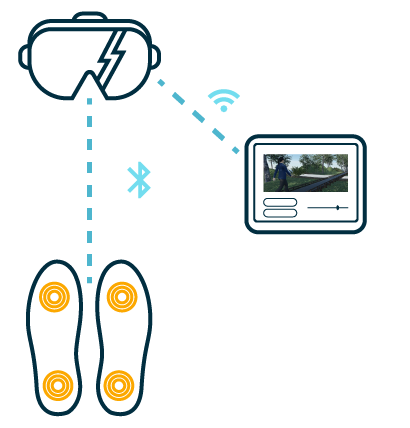
The developed solution consists of three main modules: a control interface for therapists, a virtual reality simulation running on a headset for the patient, and a haptic feedback system that provides vibrations at the level of the patient’s feet.
Designing a solution to both patients and therapists
Patients and therapists are the main user profiles for Kerflow. The challenge was to design an application suitable for two profiles that are completely different.
Before implementing our solution, we had the chance to meet and interview patients and therapists to understand their profile, their expectations, and their context.
Understanding patients
We conducted in-depth interviews with people who had suffered from several conditions, such as a stroke or head trauma.
We desired to understand not only their recovery process but also to document what their expectations were, the things that they desired to have or to do during their weeks at the hospital or at the rehabilitation center, and how they coped with their limited mobility.
Understanding therapists
We interviewed therapist profiles to understand the dimensions surrounding the rehabilitation process. These profiles ranged from doctors specialized in physical rehabilitation, ergotherapists, psychologists, and physiotherapists.
We collected feedback on several factors, such as: how they proceed with patients, what are the most common constraints in their environments, what they expect from current technological solutions, what their thoughts were about virtual reality, and what exercises were the most challenging for patients.
Key insights
Here are a few insights we learnt from these interviews:
Rehabilitation is a deeply personal process. Each person lives rehabilitation differently. People miss their own previous environment, the places they used to visit.
Variety is paramount. Rehabilitation exercises are repetitive, and therapists do their best to introduce some variety in their sessions. The goal is not to fight boredom, but to keep patients motivated to engage with something new.
Time is a shared constraint. Both patients and therapists have limited time. Setting up an exercise should be as fast and intuitive as possible.
Goals allow patients to understand their recovery. Having a set of objectives for a defined period of time helps patients to get motivated and see their progress in retrospect.
Designing and implementing a solution
Once we extracted the main insights from interviewing our potential users, we implemented a solution that displayed a virtual environment in a standalone VR headset, integrating auditory and haptic feedback to increase the patient’s immersion.
We designed a user interface that allowed therapists to parameterize sessions and avatars for patients, but most importantly, to monitor what patients were seeing in the virtual environments. This interface was designed to run on a tablet that connected wirelessly to the standalone VR headset.
Théo Blandin defined the ergonomics and design of the control interface.
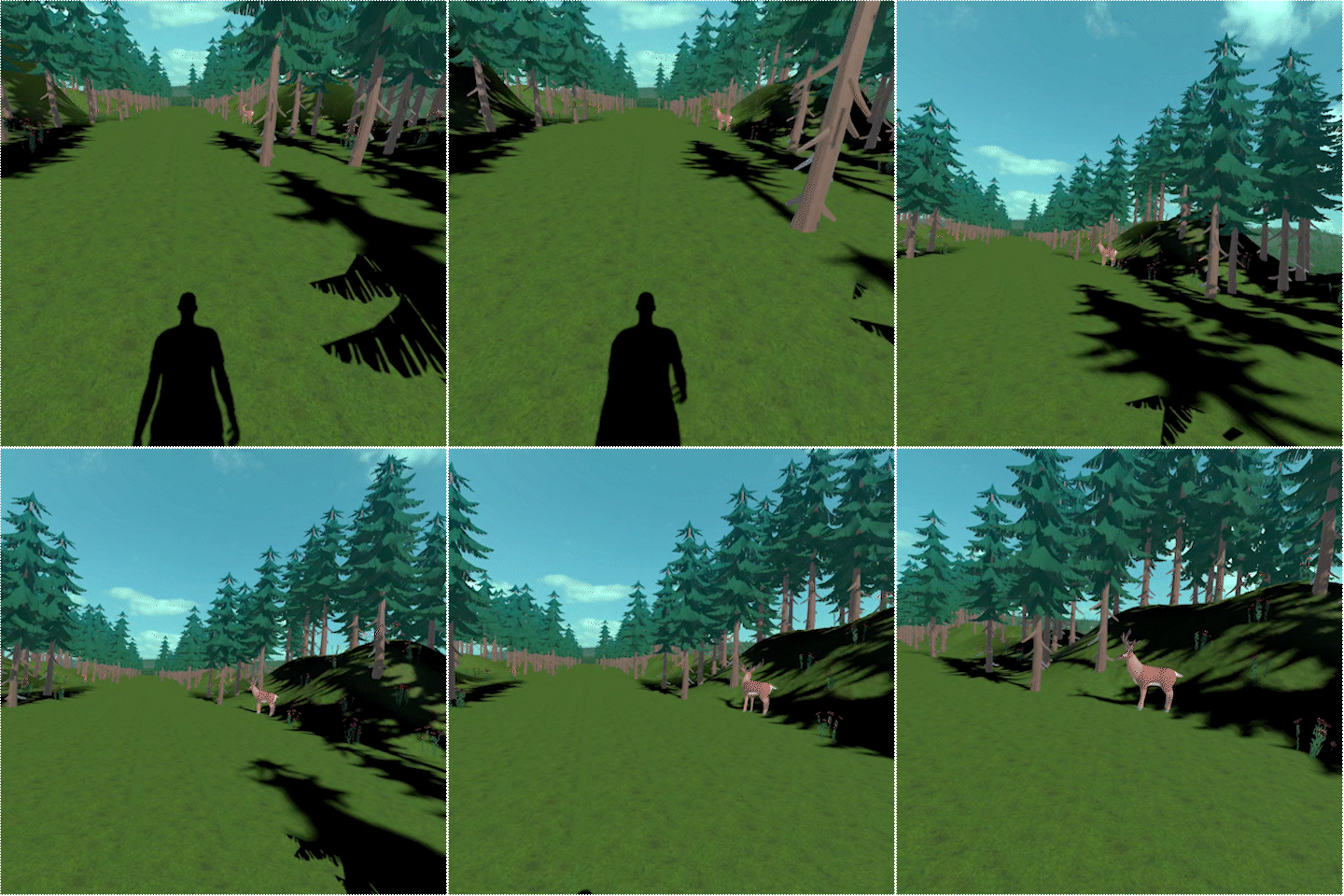
Virtual environments for rehabilitation
Rehabilitation related to mobility requires repetitive training that patients can find physically and mentally exhausting.
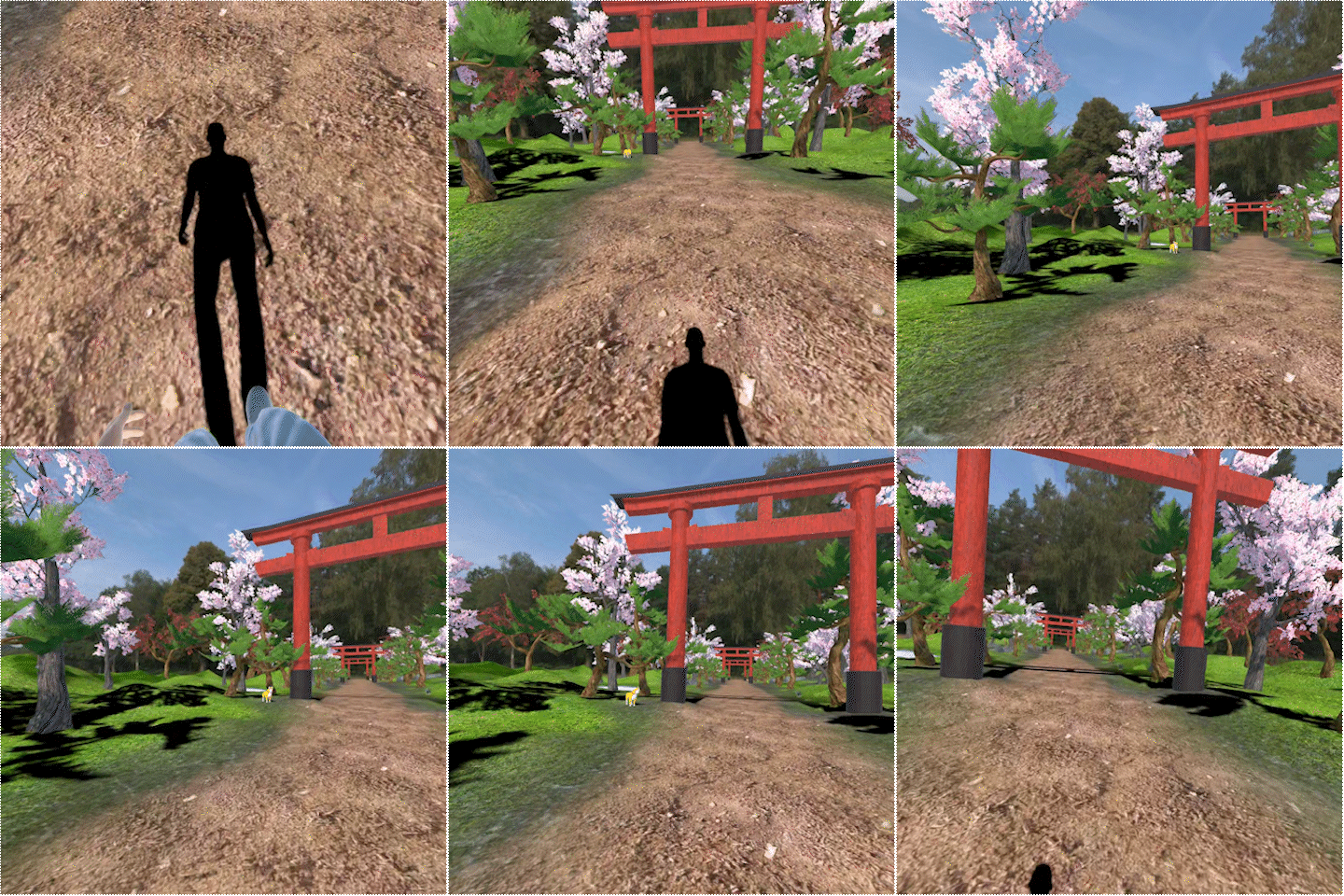
We designed a set of virtual environments to add variety to the landscapes patients could see in VR.
While we knew that variety is important for keeping patients interested, patients told us in-depth interviews how important and meaningful it is to them to have something new to look forward to during a recovery process that can last months.

Haptic feedback
In this project, I developed a haptic device prototype that provided vibratory feedback in synchrony with the avatar's steps in the virtual environment. The setup was inspired by previous research works from the Seamless research team at Inria carried out by Anatole Lécuyer, Mélanie Cogné, and Justine Saint-Aubert.
The device prototype used two vibration motors that vibrated in synchrony with the contact of the avatar’s feet with the ground. The idea was not to replicate the actual pressure one would feel during walking, but to provide a sensation that could complement the auditory and visual stimuli provided in the virtual environments.
Technical challenges
The main technical challenge was transforming a research prototype into production-ready software. We chose to rebuild the system from the ground up, reimplementing the core functionalities developed through previous research at Inria and the CHU de Rennes.
Another critical challenge was creating a fully wireless system. We observed that therapists are constantly moving between patients and spaces; therefore, the system needed to be as lightweight and portable as possible. We developed a system that allows therapists to remotely control the simulation and view the patient’s perspective in real time.
The previous research prototype was a Windows application running on a PC. To simplify system setup and improve ergonomics, we decided to develop a VR headset application that communicates with an Android application running on a tablet. This required working with graphics optimized for the rendering and processing constraints of current VR headsets.